
The UK steel sector is under strain from multiple directions at once, and a new report from Tokio Marine HCC sets out the challenges facing businesses across the steel value chain in the second half of 2026.
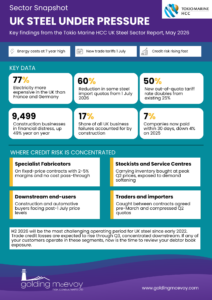
The Iran conflict has pushed UK industrial electricity prices up to 77% more than French and German competitors, up from around 25% before the conflict began. Government support schemes are helping the largest producers, but supply chain businesses will not see relief until April 2027 at the earliest.
New steel tariffs from 1 July, with the new UK steel safeguard measure cutting import quotas by around 60% and doubling the out-of-quota tariff to 50% will mean businesses that agreed contracts against 2025 prices could now face losing margin on contracts.
In addition:
- Steel prices have increased 15-35% since late 2025 on some products
- Construction insolvencies are up 49% year on year, with 9,466 firms in financial distress
- Only 7% of companies are now paid within 30 days, down 4% on 2025
- Downstream fabricators and subcontractors on fixed-price contracts are the most exposed in the sector
For any business with customers in the steel supply chain, now is the time to understand your debtor book exposure. Credit insurance will not stop the difficulties building in this sector, but it will protect your business if a customer cannot pay. If you would like to review your position, contact us.